Zinc Alloy Forced Into Steel Under Pressure
The hot-chamber die-casting process and the Zamak alloys behind Dinky, Corgi and Matchbox
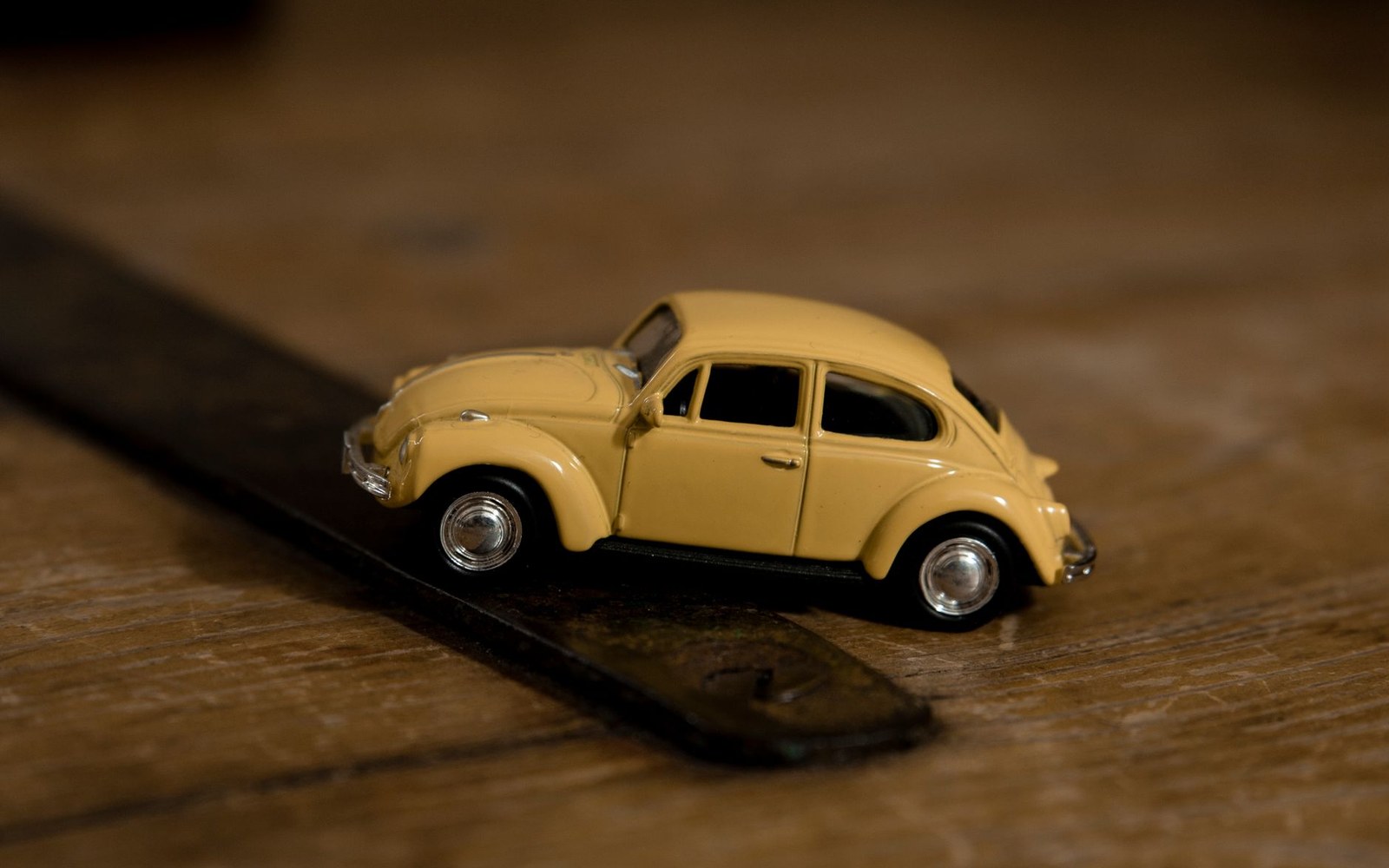
The Alloy and Its Arithmetic
Zamak is a family of zinc-based alloys whose name is a German-language acronym: Zink, Aluminium, Magnesium, Kupfer (copper). The standard formulation used in toy die-casting — Zamak 3 — contains approximately 96 per cent zinc, 4 per cent aluminium, and trace quantities of magnesium and copper, each present at fractions of one per cent. Those traces matter: magnesium suppresses intergranular corrosion, and copper marginally hardens the matrix. Aluminium is the structural element that keeps the alloy's melting point low enough — around 385–390 °C — to permit injection into a steel tool without destroying it cycle after cycle.
The resulting material is dense, dimensionally stable on cooling, and capable of reproducing fine surface detail from a hardened steel mould. A wheel arch, a door shut-line, a bonnet louvre pressed into the mould cavity emerges on the casting without secondary machining. That characteristic — sharpness at volume — is what made Zamak the natural material for small-scale vehicle models from the late 1930s onward, and what distinguished the finished product from the tinplate pressing it gradually displaced.
The Hot-Chamber Machine
Die-casting in zinc alloys uses the hot-chamber process, in which the injection mechanism sits submerged in the molten metal. A hydraulic or pneumatic ram forces a measured shot of alloy through a gooseneck passage and into the locked steel die under pressures typically between 700 and 1,400 bar. Cycle times are fast — often under thirty seconds per shot for a small tool — and the die itself, machined from tool steel, can survive hundreds of thousands of cycles before refurbishment is needed.
The steel die is the principal capital cost in any die-cast toy line. Cutting a die for a new vehicle body required skilled toolmakers and months of work; once cut, it committed the manufacturer to that model's geometry entirely. Dinky Toys, produced by Meccano Ltd at its Binns Road factory in Liverpool, built its pre-war and immediate post-war range on exactly this constraint: a relatively small number of tools, each run for long production cycles to amortise the investment. The Birmingham and West Midlands tooling base supplied much of the precision metalworking behind both the Dinky and, later, Corgi operations.
Shrinkage and Tolerance
Zamak shrinks as it solidifies, and die tools are cut oversize to compensate — the precise allowance depends on alloy grade, wall section thickness and the geometry of the part. For toy-scale models, wall sections were typically between 1.5 and 3 mm, and linear shrinkage in Zamak 3 runs at roughly 0.7 per cent. A body casting for a 1:43-scale car is small enough that this is manageable, but the gating and venting of the die — the channels through which metal enters and through which trapped air escapes — must be designed with care or porosity and cold-shut defects follow.
Lesney Products, whose Matchbox 1-75 range entered production in the early 1950s, worked at a smaller scale still, and the tooling demands were correspondingly exacting. Jack Odell's team achieved remarkable surface definition at 1:75 and smaller partly by tight process discipline and partly by keeping wall sections thin enough to fill completely before the alloy began to freeze.
The Post-War Industry
Britain's post-war die-casting capacity for toys was concentrated in the West Midlands and in London-area satellite firms. Raw Zamak ingot arrived from zinc smelters — the UK had significant refining capacity through firms supplying both industrial and toy-trade customers — and foundries supplying Dinky, Corgi and Lesney ran shift patterns around their hot-chamber machines to maintain throughput. The toy die-casting sector operated well below the precision tolerances of automotive or aerospace die-casting, but it drew on the same pool of toolmakers and process engineers trained during wartime production.
By the mid-1960s, the Nuremberg trade was watching the British diecast model closely. German and later Hong Kong manufacturers adopted equivalent alloys and processes; the hot-chamber machine and Zamak's particular combination of low melting point, fluidity and detail retention proved universal. Zinc's role in the alloy ↗ has been well characterised in materials literature, and the properties of Zamak 3 specifically ↗ — tensile strength, elongation, dimensional stability — remain the benchmark against which competing die-casting alloys are measured.