Acrylonitrile Butadiene Styrene, Held to 0.005 mm
The material behind LEGO's clutch power is a specific formulation of ABS, and the tolerance that makes a stud grip and release without tools is smaller than a human red blood cell.

Why Cellulose Acetate Had to Go
LEGO began moulding its interlocking bricks in cellulose acetate, a thermoplastic derived from plant cellulose. The material's fatal flaw was dimensional instability: it absorbed atmospheric moisture, swelling enough to alter stud diameter and destroy the consistent grip the system depended on. In 1963, LEGO switched entirely to acrylonitrile butadiene styrene — ABS — a rigid engineering thermoplastic whose three monomers collectively deliver hardness from the styrene phase, impact resistance from the butadiene rubber phase, and chemical resistance from the acrylonitrile. The result is a material that holds its dimensions in normal storage conditions far more reliably than its predecessor.
Clutch Power and the Tolerance It Requires
Clutch power — the measured force to press two compatible bricks together and to pull them apart — depends on the interference fit between each hollow stud and the tube inside the brick above it. That interference, engineered to a tolerance of approximately 0.005 mm, determines whether a connection holds under play stress while still releasing by hand. Achieve it consistently and the brick works everywhere. Let it drift and bricks either fuse or fall apart.

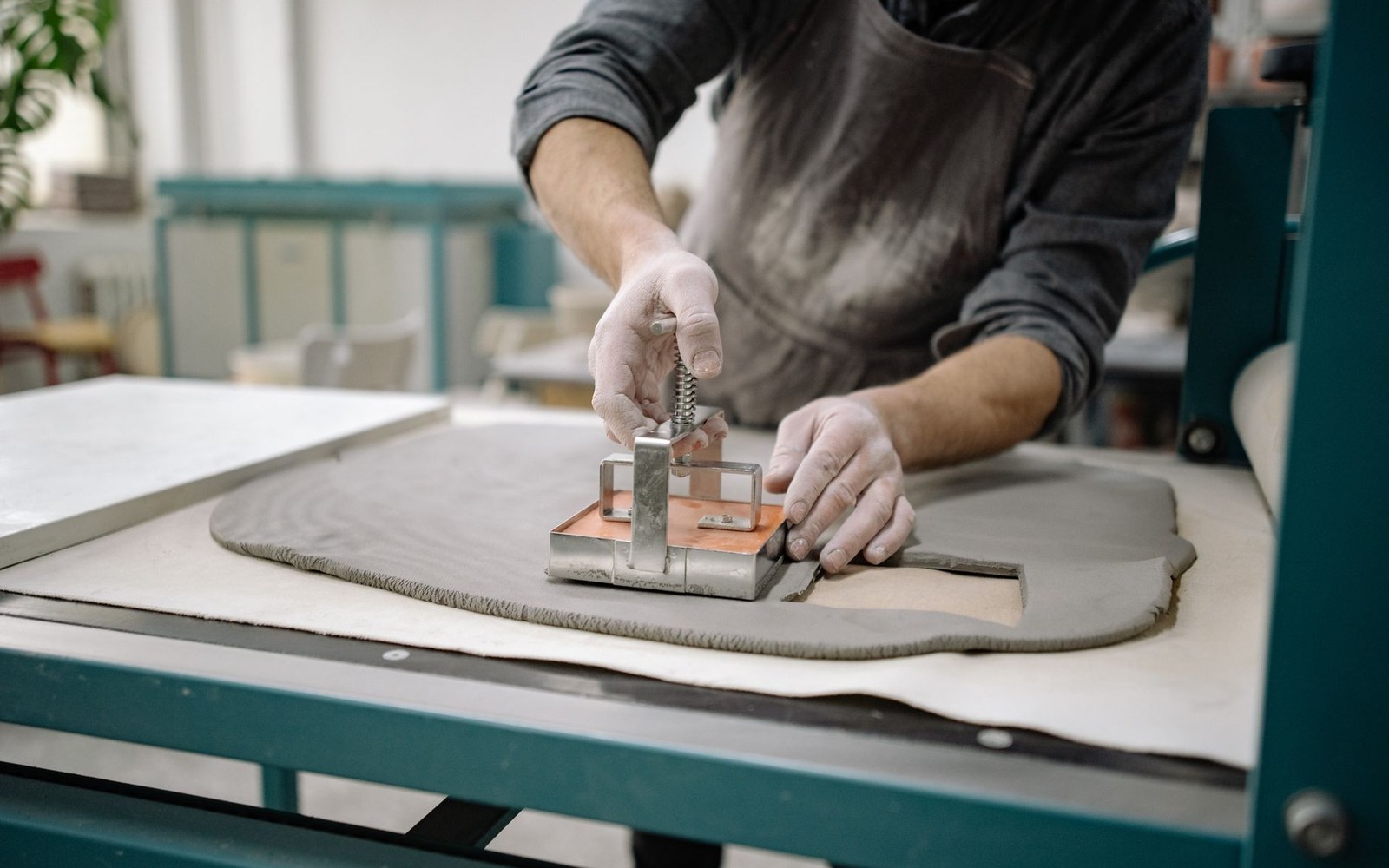
Holding that tolerance across millions of parts demanded injection-moulding equipment capable of controlling melt temperature, injection pressure and cooling rate with equivalent precision. It also required mould tools machined to matching standards: hardened steel cavities whose dimensions account for ABS's predictable shrinkage rate on cooling — typically in the range of 0.4 to 0.7 percent — calculated into every feature of the tool from the outset. ABS's dimensional stability ↗ is what makes that shrinkage calculation reliable enough to stake a production system on.
The 1963 material change was therefore not a substitution but a recalibration of the entire manufacturing chain — tool, machine, material, and the specific geometry of the stud — brought into alignment around a single measured outcome.