Jack Odell's Matchbox and the 1-75 Range
Lesney Products built a numbered series of seventy-five die-cast miniatures that fitted in a child's palm — and in a matchbox. The engineering that made them distinct began with the box.
The Founding and the Name
Lesney Products was registered in London in 1947 by Leslie Charles Smith and Rodney Smith — no relation — with Jack Odell joining shortly after as the firm's principal die-casting engineer. The name compressed Leslie and Rodney into a single coinage. Their early output was industrial: die-cast components and a large toy road roller that briefly attracted retail interest. None of it pointed obviously toward what came next.
The pivot arrived through Odell. Working with Zamak — the zinc-aluminium-magnesium-copper alloy that had already proved itself in Dinky production — Odell developed miniature vehicle castings small enough to fit inside a standard matchbox. The commercial logic was immediate: the box was its own packaging, a price anchor, and a novelty. A die-cast Coronation Coach, produced in 1953 to coincide with Queen Elizabeth II's coronation, demonstrated that a small Lesney casting could attract genuine retail volume. That coach sold in numbers that surprised the trade.

The Matchbox trademark was registered the same year. The name migrated from incidental packaging format to brand identity, and Lesney committed to a numbered series.
The 1-75 Range: Structure and Logic
The series launched as the Matchbox 1-75 — each model assigned a fixed number that it held for the duration of its production run, replaced by a different vehicle only when the tooling was retired. The number was not a production sequence but a catalogue address. A collector tracking number 23 across years was tracking a living position in an engineered taxonomy: as one model was deleted, its slot was reallocated.
This structure had commercial consequences. Retailers could manage shelf space against a fixed count. Buyers understood quickly that the range was bounded, making accumulation feel like a completable project. The numbered-slot logic had no direct precedent in the Dinky or Corgi ranges, both of which used reference numbers that expanded without a ceiling. Dinky's catalogue grew to well over two hundred items by the mid-1950s; Corgi, launched by Mettoy in 1956, immediately pursued detail features — opening bonnets, jewelled headlamps — that pushed retail price upward. Lesney chose a different axis.
The Casting Itself
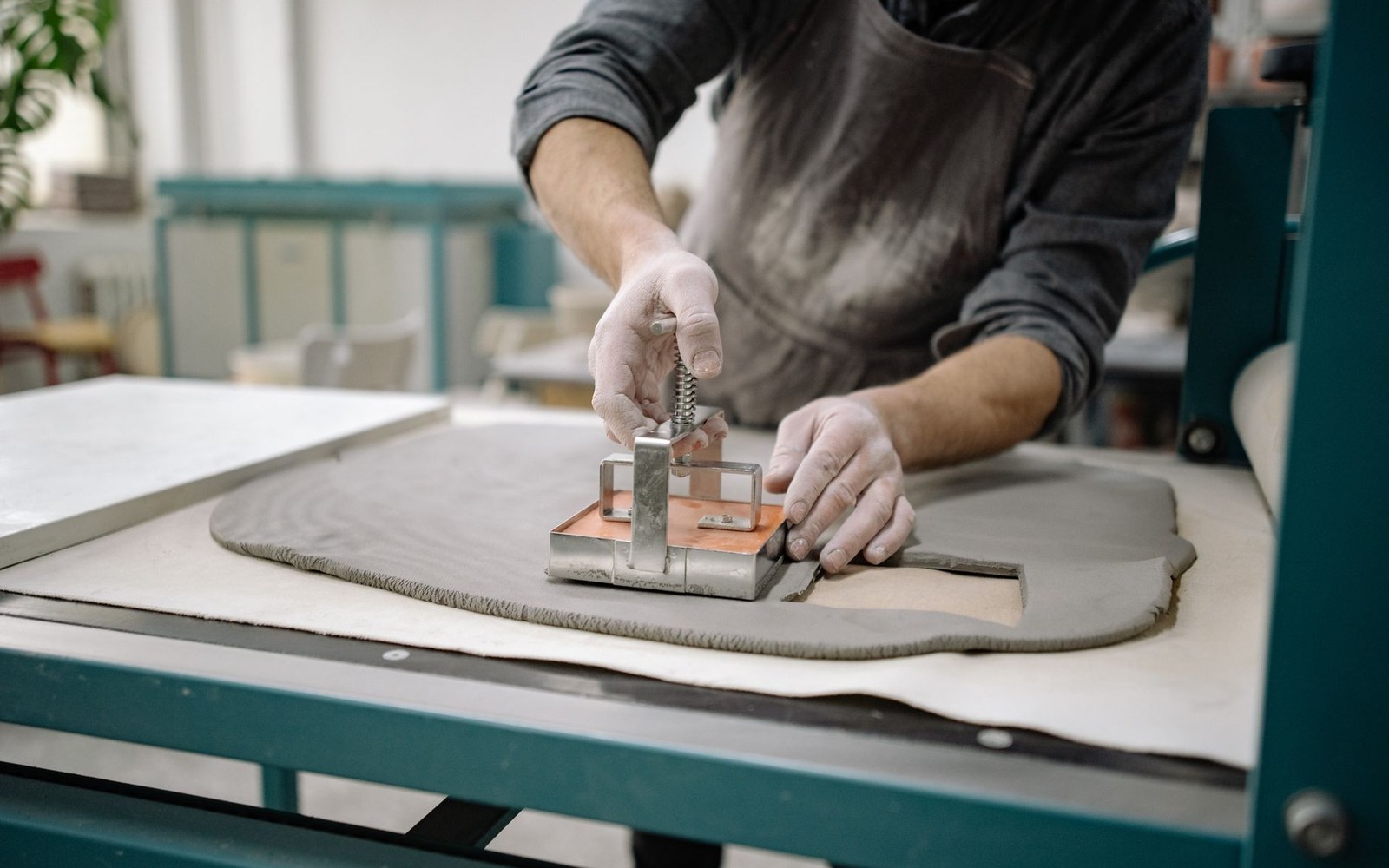
Odell's die-casting approach for the 1-75 range prioritised dimensional consistency over surface embellishment. The die-casting process forces molten Zamak under high pressure into a hardened steel mould tool; the resulting part is dimensionally stable and takes paint well, but the mould represents the principal capital investment — a cost that must be amortised across a very high production run to be economic. Lesney's answer was volume: the models were priced at the bottom of the diecast market, which required the tooling to yield enormous quantities before retirement.
The castings were smaller than Dinky equivalents — typically in scales hovering around 1:64 to 1:75, though Lesney published no single governing scale, and the models varied to fit the matchbox footprint rather than to achieve scale consistency. Dinky operated at approximately 1:43 for most of its range; Corgi matched it. Lesney's compression was not a shortcoming but a deliberate constraint, since the box set the outer dimension and the casting had to comply.
Paint was applied by tumbling in the early production years, with tampo and hand-detailing added to wheels, grilles and windows as the range matured. Base plates, initially unpainted metal, carried model name and country of manufacture: Matchbox castings produced in the UK ↗ before Lesney's production moved partly offshore are distinguishable by their base markings, a point of continuing significance to provenance-focused collectors.
What Lesney Made
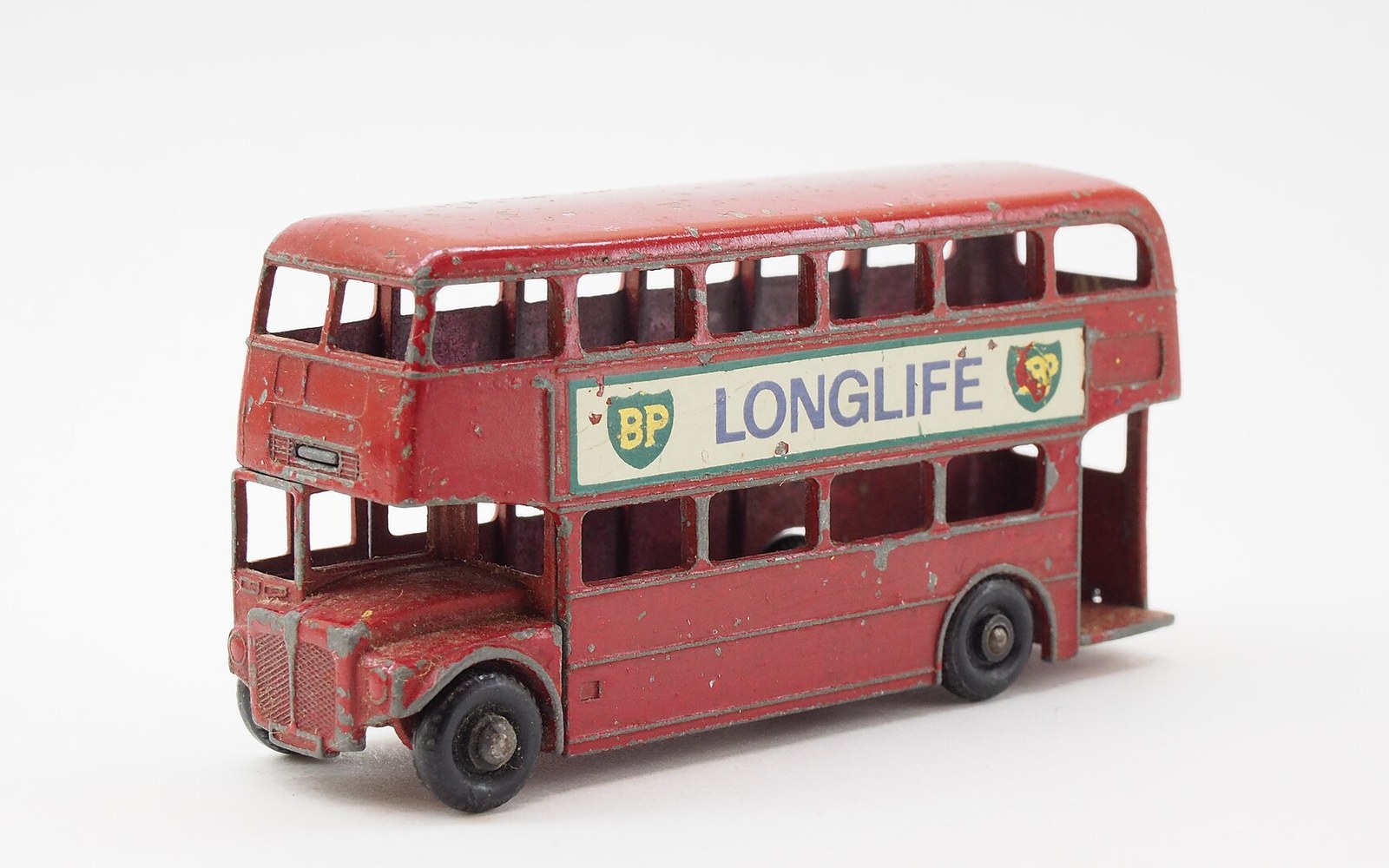
The 1-75 range ran continuously from the early 1950s until Lesney Products entered receivership in 1982, when Universal Toys acquired the brand ↗. Across those decades the range documented the vehicles of British commercial and domestic life — Bedford lorries, AEC buses, Land Rovers, Ford Anglias — with a fidelity that was archaeological rather than decorative. Jack Odell's contribution was the constraint itself: a box, a number, a price, and a casting that had to meet all three without compromise.