The Hollow-Cast Soldier and the Legislation That Ended It
Lead, tipped out of the mould before it set — and eventually tipped out of the toy trade entirely.
The Process and Its Advantages
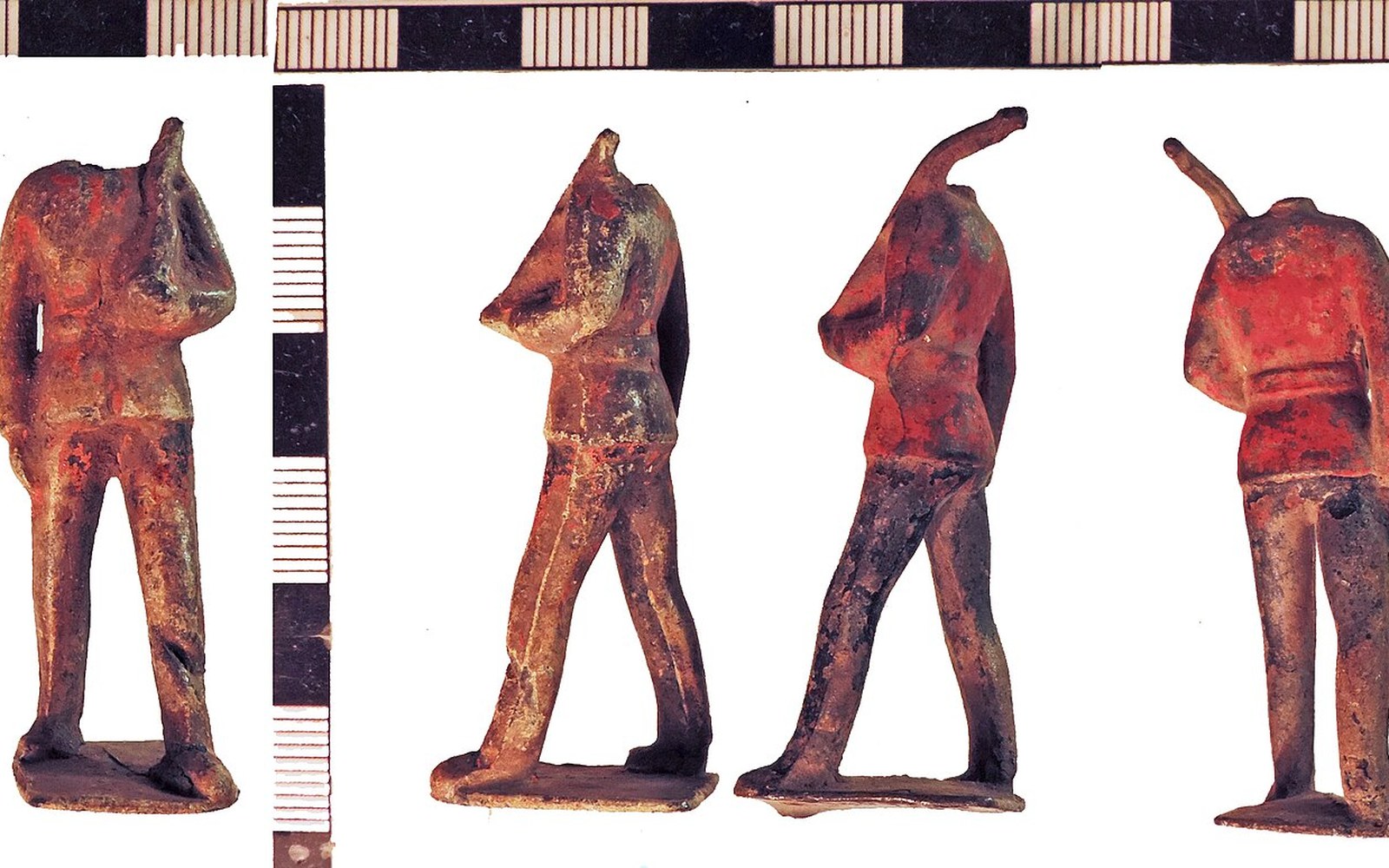
William Britain Sr. registered a patent in 1893 for a manufacturing method that changed the economics of the toy soldier trade. Where Continental rivals, particularly the German firms working out of Nuremberg and Sonneberg, produced solid lead figures heavy enough to feel substantial but expensive to ship in quantity, Britains' hollow-cast process achieved something neater: molten lead alloy was poured into a spinning mould and almost immediately tipped out, leaving only a thin shell conforming to the mould's interior surface. The result was a figure sharper in its surface detail than many solid-cast equivalents, roughly half the weight, and significantly cheaper in metal content per unit.
The commercial consequences were immediate. Britains could price its sets below the imported German competition while maintaining a finish that satisfied the trade buyers at London toy fairs. By the early twentieth century the firm had catalogued hundreds of distinct figures — infantry, cavalry, artillery crews, colonial troops — all produced through the same basic sequence: pour, spin or tip, cool, trim the seam, hand-paint. The painting remained hand-applied throughout the hollow-cast era, typically by outworkers on a putting-out basis, a production arrangement that kept overhead low and volume flexible.
The alloy itself was predominantly lead, with small additions of antimony to improve hardness and casting definition. Tin was sometimes present. The precise composition shifted across decades and suppliers, but lead consistently formed the bulk of the metal, which was both the process's virtue — low melting point, easy flow into fine detail — and, in time, its legal liability.
Health Evidence and the Regulatory Timeline
Concern about lead in toys ↗ was not a sudden discovery of the postwar period. Medical literature linking lead exposure to neurological harm in children had been accumulating since the late nineteenth century, and the occupational hazard to factory workers handling lead alloys was documented earlier still. What changed in the postwar decades was the political willingness to act on that evidence in consumer product law.


In the United Kingdom, the regulatory sequence ran through several stages. Voluntary codes preceded mandatory standards, and the toy trade operated under guidance from the British Standards Institution well before any hard legislative prohibition. The formal framework arrived with BS 5665 ↗, the British toy safety standard first issued in 1979, which set migration limits for hazardous elements in toy materials — a formulation that covered paints and coatings but also materials from which toys were made. By that point hollow-cast lead production had already declined sharply: not because of direct prohibition but because Zamak and other zinc-based die-cast alloys had proven themselves technically superior for fine-detail miniature work, and because the Lesney Products model — zinc die-casting at volume, with tighter dimensional control — had become the industry template for metal toy figures and vehicles from the 1950s onward.
The United States reached its legislative endpoint through the Consumer Product Safety Commission, established in 1972, whose authority over hazardous materials in toys predated the later and more specific ASTM F963 voluntary standard of 1986. The CPSC's general hazardous substance framework effectively closed the market to new lead-alloy toy production before any single statute named hollow-casting explicitly.
What this means in practice for surviving objects is that virtually all hollow-cast Britains figures in circulation were made before the mid-1960s. The firm itself shifted progressively toward plastic from the late 1950s, and the last lead hollow-cast sets left regular production before the main legislative wave arrived — making the legislation less a guillotine than a confirmation of industrial change already under way. The figures remain as manufacturing specimens: evidence of what a tipped-out shell of metal, held to a mould for seconds, could produce at scale.