Mattel in 1945 and the Barbie Decision of 1959
The picture-frame workshop that became the world's largest toy company, and the vinyl doll that got it there
From Garage to Manufacturer
Mattel's origin is modest enough to border on myth: in 1945, Harold Matson and Elliot Handler combined syllables from their names — Mattfrom Matson andEl from Elliot — and began making picture frames in a Southern California garage. Matson sold his stake to Elliot Handler early on, and within a year Ruth Handler had effectively repositioned the business toward toys, using frame offcuts to produce dollhouse furniture. The pivot was opportunistic rather than strategic, but it revealed a working principle the company would return to repeatedly: recognise the manufacturing capacity already in the building and find a toy it can make.
Through the late 1940s and 1950s Mattel expanded along conventional lines — musical toys, cap guns, a burp gun whose sales demonstrated that television advertising could move product in volumes the trade press had not yet theorised. The company became one of the first toy manufacturers to advertise directly to children via the Mickey Mouse Club from 1955, bypassing the retail buyer and the parent simultaneously. By the time Ruth Handler brought her doll concept to the company's design team, Mattel was already a business that understood production at scale and the industrial logic of a recurring accessory line.
The Doll Nobody Wanted to Make
The concept Ruth Handler advanced internally met documented resistance from the start. Elliot Handler and the design team were sceptical: the American market was furnished with infant and toddler dolls; an adult-proportioned fashion doll had no established precedent in domestic manufacture. Handler's observation — drawn from watching her daughter Barbara play with paper cut-out fashion dolls — was that children projected adult narrative onto flat figures and would do the same for a dimensional one. The commercial argument she made was equally direct: a doll requiring a wardrobe was a doll that sold units after the initial purchase.
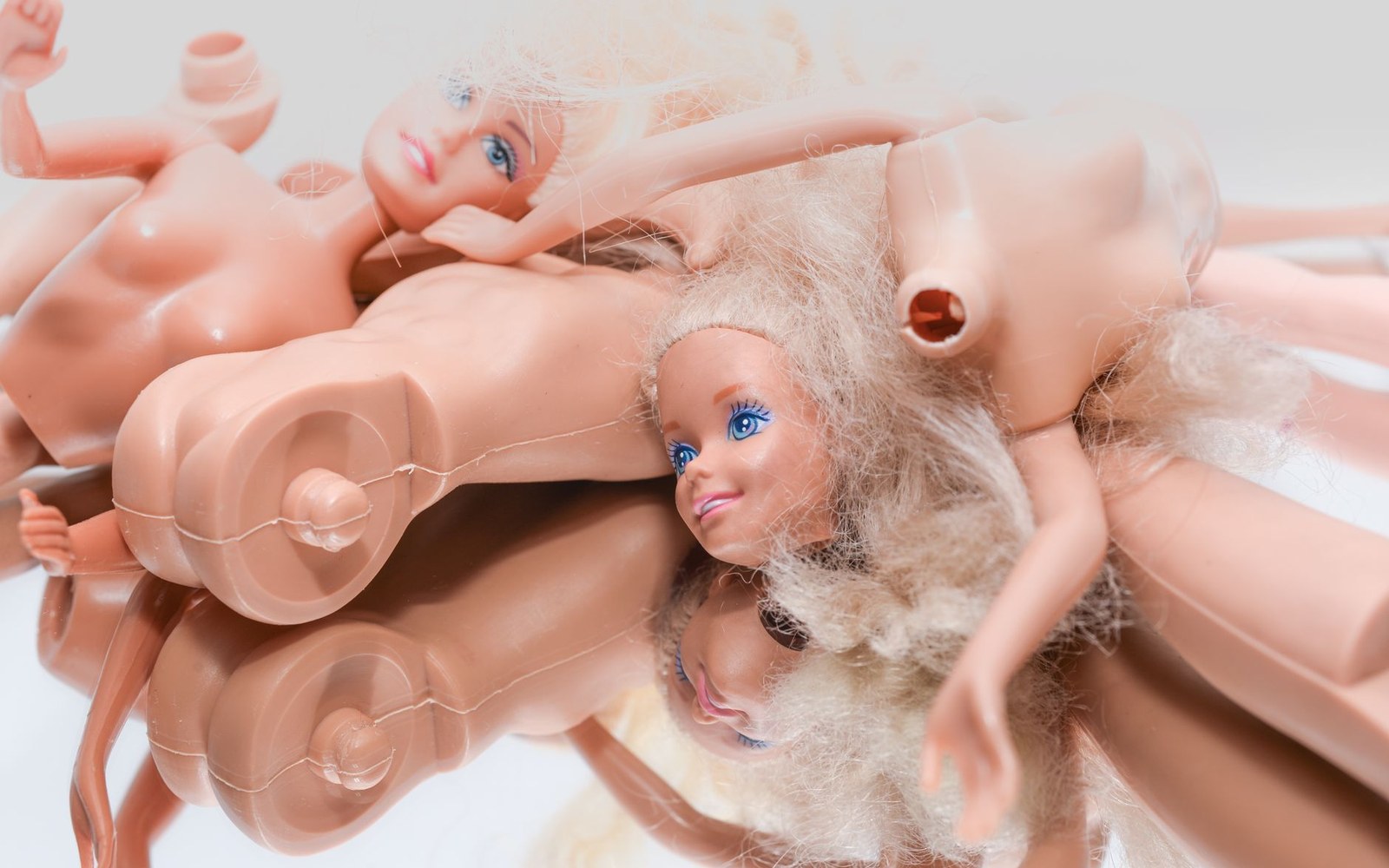
The figure that Ruth Handler presented at the 1959 American International Toy Fair was named Barbie, after her daughter. It measured eleven and a half inches and was manufactured from polyvinyl chloride, the same vinyl formulation entering wide use in industrial and consumer goods through the 1950s. PVC allowed Mattel to achieve the surface finish and dimensional precision a fashion doll required at a unit cost that paper-doll prices could not match and that the accessory revenue model could subsidise. The body was produced by Kokusai Boeki Kaisha ↗ in Japan, where labour costs and existing vinyl processing capability made the tooling investment commercially viable.
Manufacturing the Hair
The detail that most distinguished Barbie from earlier vinyl dolls was the rooted hair. In contrast to moulded or glued wigs — both of which degraded under handling and limited styling — rooted hair was implanted strand by strand into the softened vinyl scalp using a needle-punch process adapted from textile manufacturing. Each strand of synthetic fibre, typically made from saran ↗, was looped through the scalp and held by the material's elasticity as it cooled. The result was a head of hair that could be combed, set and restyled, transforming a product feature into a play function and differentiating Barbie from every competing doll in the case at the fair.
The mould tools for the body were capital-intensive and represented a commitment to volume: the investment was only recoverable through sustained production, which in turn required the accessory wardrobe Ruth Handler had argued for. That wardrobe, designed by Charlotte Johnson, was manufactured initially in Japan and later sourced across multiple territories as Mattel's supply base grew. The fashion line gave the doll a reason to reappear in catalogues each year, and each year's costume required no new body tooling — only new patterns and a logistics chain already in place.
Barbie reached retail in March 1959. First-year sales exceeded expectations by a margin that ended the internal debate about the format. The manufacturing decisions taken in 1958 — vinyl body, rooted synthetic hair, modular wardrobe — remained the doll's production architecture for decades.