The Button in the Ear: Steiff's Mark from 1904
A small metal fastener sewn into the left ear of every Steiff animal became one of the most precisely documented provenance marks in the history of toy manufacture.
From Felt Elephant to Registered Trademark
Margarete Steiff established her workshop in Giengen an der Brenz, in the Swabian region of what is now Baden-Württemberg, in 1880. Her original trade was in felt goods — garments and accessories — and the first stuffed animal attributed to her was a small felt elephant produced as a pincushion in that founding year. Within a decade she was supplying stuffed animals to the German toy trade, and by 1893 the firm was exhibiting at Leipzig's trade fair ↗, the principal commercial platform for Central European toy and novelty goods before Nuremberg assumed that role.
Richard Steiff, Margarete's nephew, joined the firm in 1897 after training at the Kunstgewerbeschule in Stuttgart. His contribution was the jointed bear: a stuffed animal with disc-jointed limbs and neck, sewn from mohair plush over an excelsior filling, which debuted at the Leipzig Spring Fair in 1903. The design attracted an American buyer — the commission is documented through the firm's own export records — and the bear entered production under the internal designation 55PB, denoting its size in centimetres, its plush material, and the German word beweglich (moveable). The commercial success that followed created an immediate problem: the German toy trade had no shortage of imitators, and Steiff needed a mark that was physically attached to the object rather than printed on removable packaging.
The Button and What It Was Made Of
Richard Steiff registered the Knopf im Ohr — literally "button in the ear" — as a trademark in 1904. The device was a small metal stud, pierced through the fabric of the left ear and clinched on the reverse, which could not be removed without visible damage to the animal. From the collector's standpoint the button's exact form and material carry significant dating value, because the firm changed both repeatedly across its production history.
The earliest buttons, from 1904 and into the first years of production, were blank — no text, no embossing, simply a plain metal disc in nickel-plated brass. A paper label attached by a separate cord accompanied the button at this stage. By around 1905 the button received the word Steiff in an elephant-logo surround, and shortly afterward in a plain serif script. These earliest marked buttons are commonly called the "elephant button" and "printed ear button" by specialists, the latter distinguished by the typographic style of the lettering rather than any transfer or lithography — the text was stamped directly into the metal.
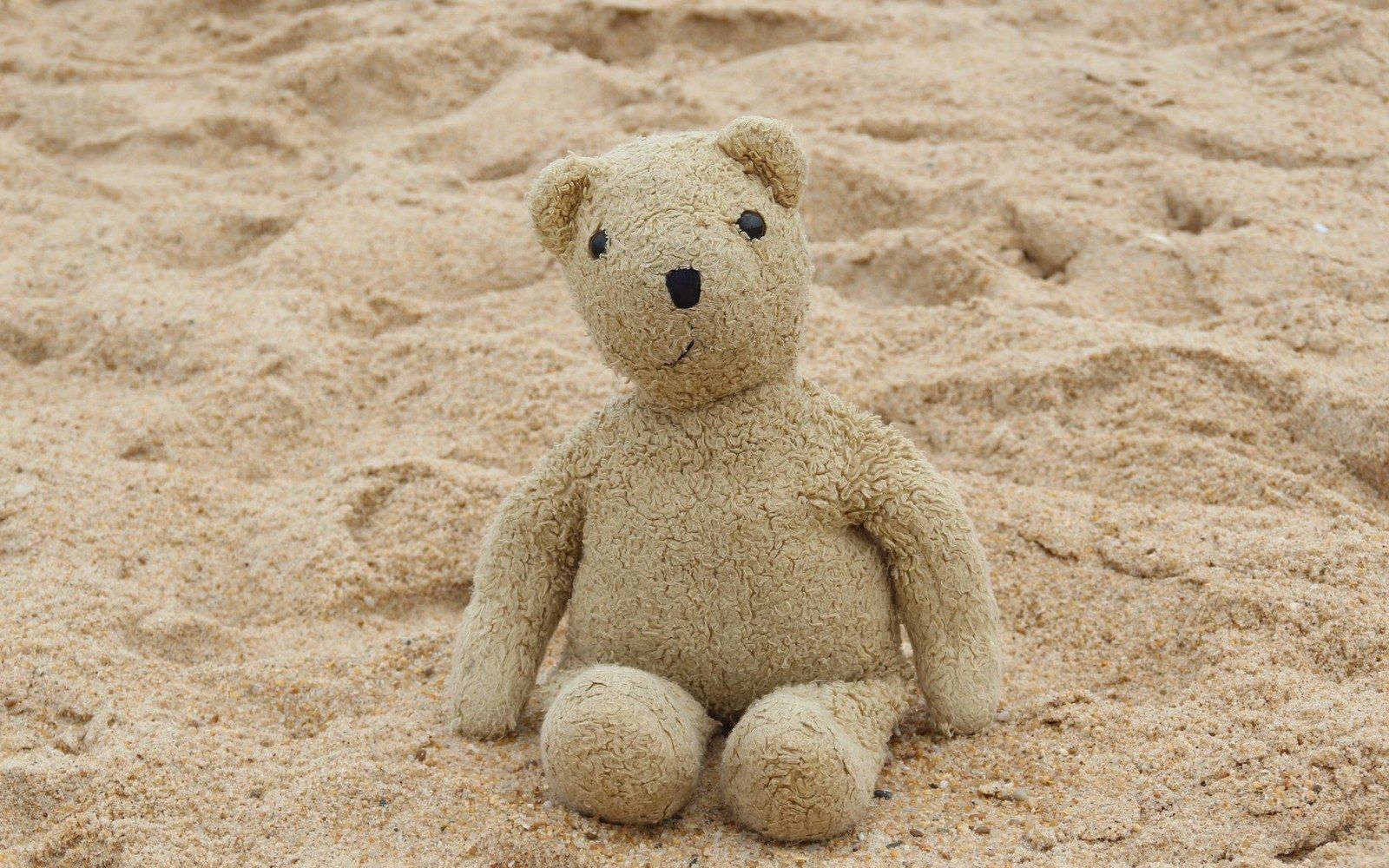

During the 1920s and 1930s production pressures and material economics produced buttons in a range of base metals; the nickel content varied and some interwar examples were made in less refined alloys. After the Second World War, Steiff resumed production in Giengen and the button was again standardised, with a raised-letter format in chrome-plated steel that persisted through much of the postwar period. Beginning in 1980, to mark the centenary of the firm's founding, a special gold-coloured button was used on commemorative lines — a deliberate departure from the standard finish rather than a production economy, and documented in the Steiff company archive.
The Mark as Manufacturing Record
The Knopf im Ohr system is notable in the history of toy manufacture precisely because it creates an unbroken chain of physical evidence. Unlike a printed mark on a base or a paper label that detaches, the button is sewn into the structure of the animal: removing it requires piercing the ear fabric, and the resulting hole is as legible to a specialist as the button itself. Museum collections — including the Victoria and Albert Museum of Childhood holdings — treat the presence or absence of the button, its form, and its finish as primary data for dating and attribution.
Margarete Steiff died in 1909, five years after the button's registration. The firm she founded continued under family direction, and the Knopf im Ohr remained the constant through every material and ownership change that followed — a stamped-metal marker of origin that has outlasted every other aspect of the production process it was designed to protect.