Sonneberg and the Cottage Industry That Supplied Europe
The Thuringian toy district ran not on factories but on farmhouses — and for two centuries it clothed, carved and painted the continent's nurseries.
The Geography of Dispersal
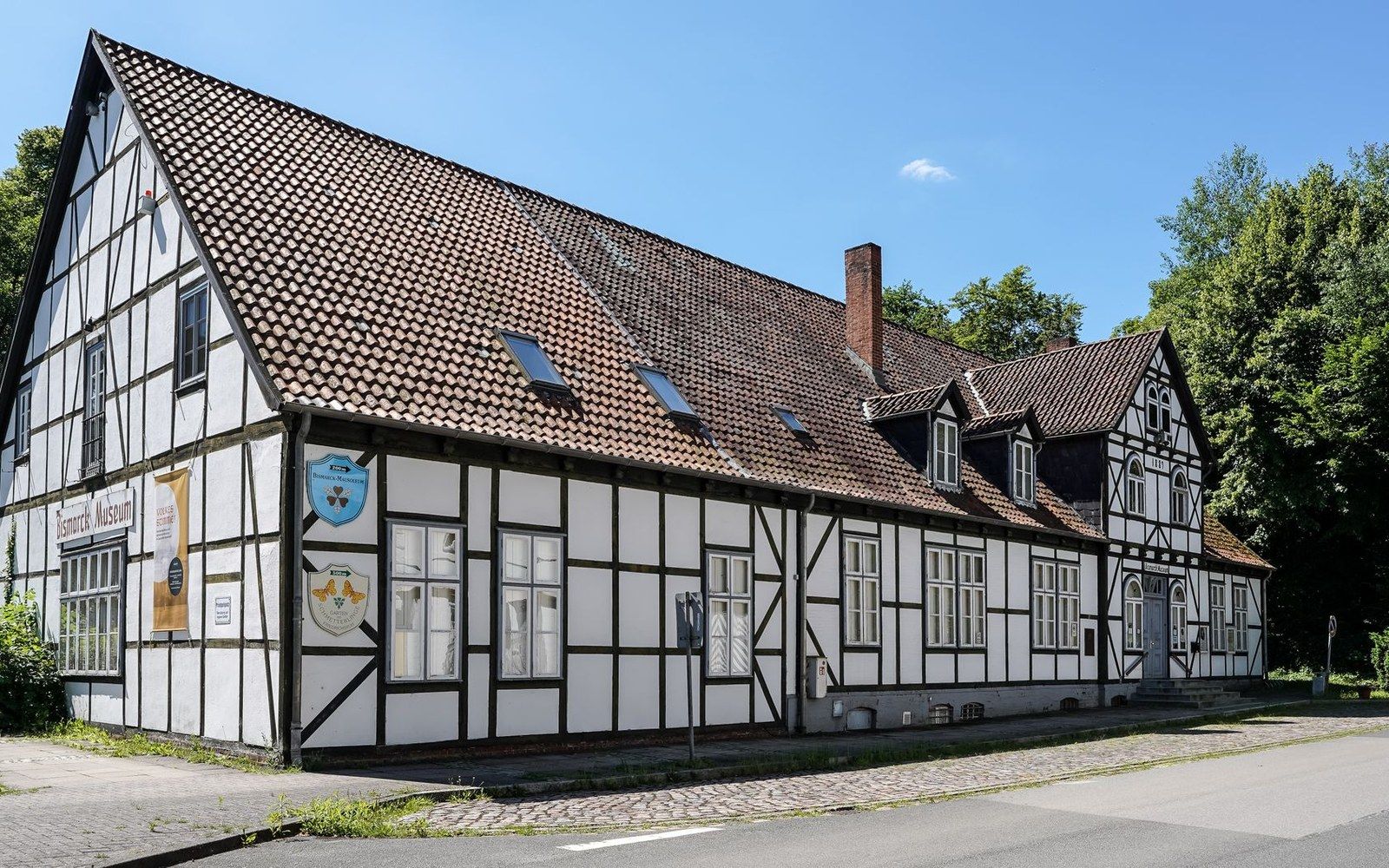
Sonneberg, a market town in the Duchy of Saxe-Meiningen, sits at the southern edge of the Thuringian Forest. The terrain that made large-scale agriculture impractical made craft industry almost inevitable: steep hillsides, dense forest, and long winters pushed rural households toward supplementary income. By the mid-eighteenth century, merchant houses in Sonneberg had formalised what became one of the most studied examples of the putting-out system — the arrangement in which a merchant supplied raw materials to outworkers in surrounding villages, collected the finished components, and handled all sale and export himself.
The division of labour was acute. One household carved unfinished wooden blanks; a neighbour sanded them; another applied gesso grounds; a fourth painted features. Paper-maché doll heads were pressed and trimmed in one cottage while their leather bodies were cut and stitched a valley away. Porcelain doll heads arrived from specialist kilns in the broader Thuringian network and were matched to bodies made elsewhere. No single household needed to understand the finished article — only its own step in the sequence.
Merchants, Nuremberg, and the Export Chain
Sonneberg's merchants were the economic nerve of the system. They held the product knowledge, the foreign-language correspondence, and the credit lines. Finished goods moved south to Nuremberg ↗, where the established trading infrastructure connected Thuringian output to buyers in France, Britain, the Netherlands and, by the mid-nineteenth century, North America. Nuremberg's own toy industry — metalwork, mechanisms — complemented rather than competed with Sonneberg's wood and textile production, and the two districts together gave German toy exports a breadth no single locality could have managed.
The scale that resulted was documented by nineteenth-century German economic geographers ↗ as a paradigm of distributed manufacture: thousands of outworkers, most of them agricultural households, producing for a market they never directly encountered. Sonneberg's merchant houses maintained showrooms and order books oriented toward the great trade fairs, particularly the Leipzig Fair, where buyers from across Europe placed their annual orders.
Materials and What the System Could Handle
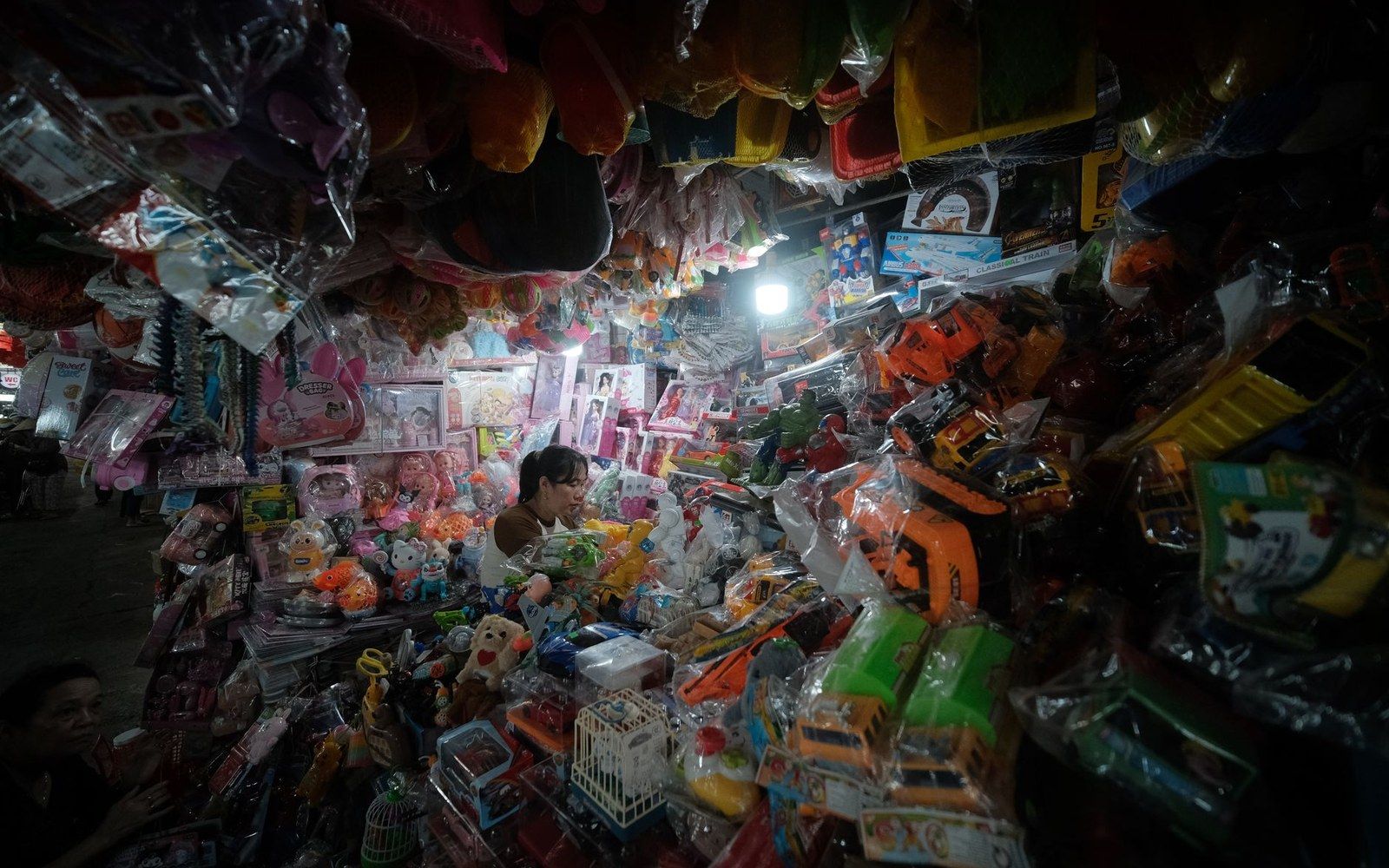
The putting-out system favoured materials that were divisible and forgiving of slight variation between batches. Wood was universal — the forest supplied it, and a turner's lathe required only a small outbuilding. Paper-maché and composition (a mixed paste of sawdust, glue and whiting) could be pressed in domestic moulds and dried beside a stove. Excelsior — fine wood shavings used as stuffing — was a by-product of the carpentry trade and filled cloth-bodied dolls and early stuffed animals with equal ease.
The system's limits appeared wherever precision or heat was required. Metal mechanisms, clockwork movements and glass eyes were contracted to specialists or sourced externally; the household worker was not equipped for them. This structural ceiling kept Sonneberg's output oriented toward soft goods, carved figures, and the lower end of the doll trade rather than the mechanical toys that Nuremberg's metalworkers dominated.
Partition and Aftermath
The district's continuity ran until the political rupture of 1945. Sonneberg fell within the Soviet occupation zone and subsequently within the German Democratic Republic; the pre-war merchant network, most of whose principals had operated across what became an international border, was severed. The Bavarian town of Neustadt bei Coburg — just across the new boundary — drew many refugee craftworkers and attempted to reconstitute elements of the trade on the western side. The Sonneberg district itself was reorganised under state enterprise structures, and the individualised household economy of the putting-out system was absorbed into collective manufacturing.
The Sonneberg Toy Museum (Spielzeugmuseum Sonneberg) ↗, which holds significant material evidence of the district's production across this whole period, preserves moulds, tools, sample boards and merchant catalogues that document how the system actually operated — objects that are now among the primary sources for the history of European distributed manufacture.